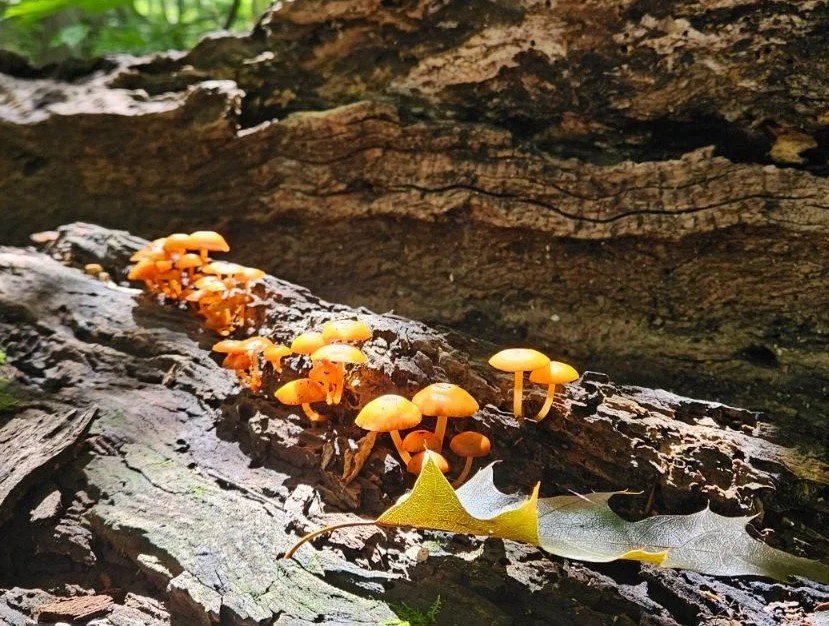
Fungi and Ecosystem Function
Fungi are critical for healthy ecosystem function, decomposing dead organic matter as saprotrophs, operating in symbiosis with plant roots as mycorrhizas, and causing disease as pathogens. One teaspoon of healthy soil can contain up to six miles of fungal mycelium, storing vast quantities of carbon belowground. Understanding what controls their distributions under global change, how they affect environmental health, and how they can be included in conservation and restoration efforts are all critical areas of research we are exploring.
Like bacteria, the EM-CE lab uses DNA-based techniques to identify, categorize, and study fungi found in soil and plant roots. We use this information to learn more about plants and the environment.
Research Projects
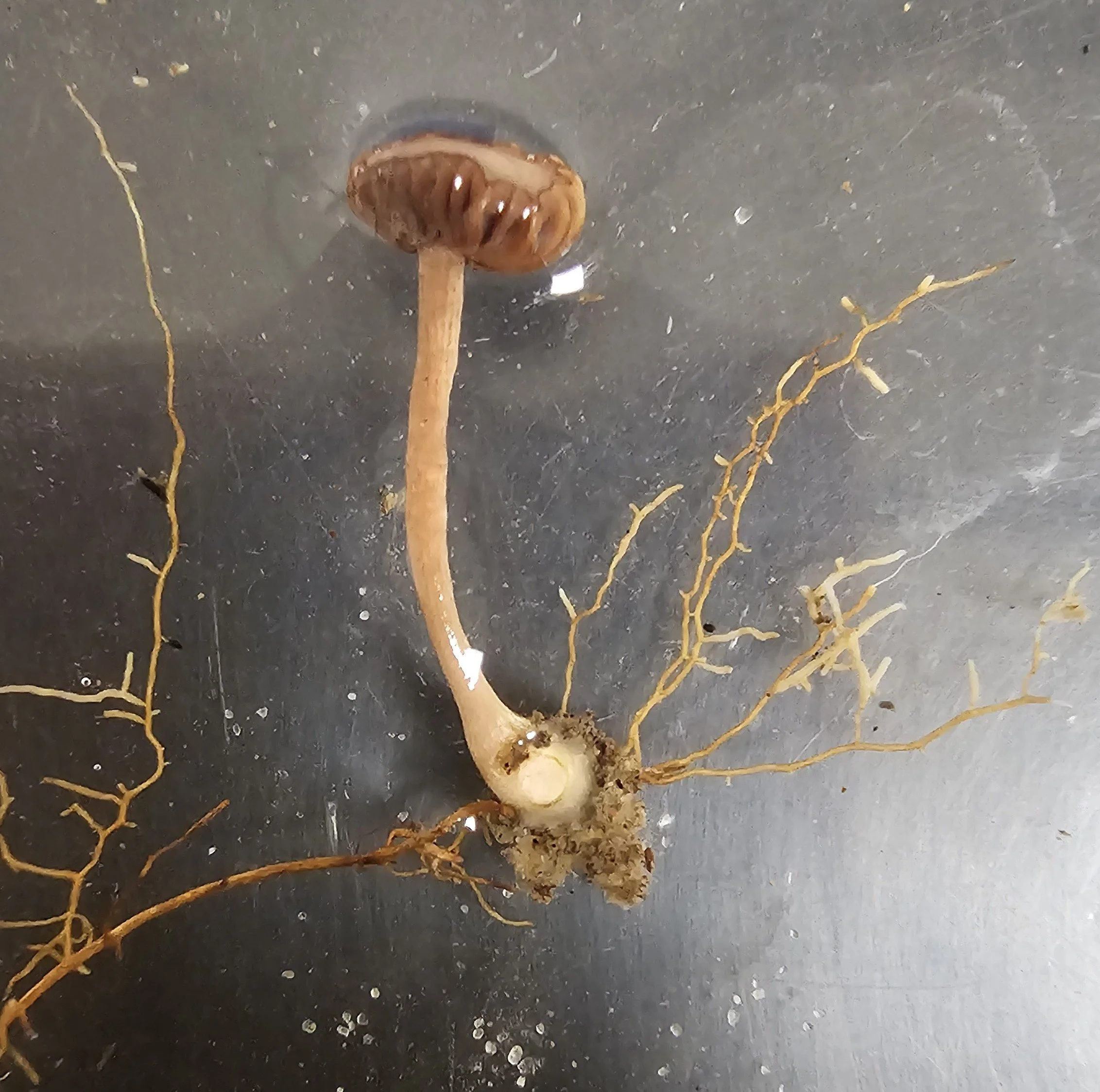
The Good (and Bad) of Plant-Fungal Interactions
We are working on a variety of projects studying how specific plants influence the growth of saprotrophic, mycorrhizal, and pathogenic fungi, and what happens to plants and the environment as a result of their growth. Much of this work involves plant roots because they are the main interface where plants and fungi interact, in addition to soil. Using a One Health framework, we try to understand how good interactions can be promoted and how bad interactions can be minimized as global change reshapes ecosystem dynamics.
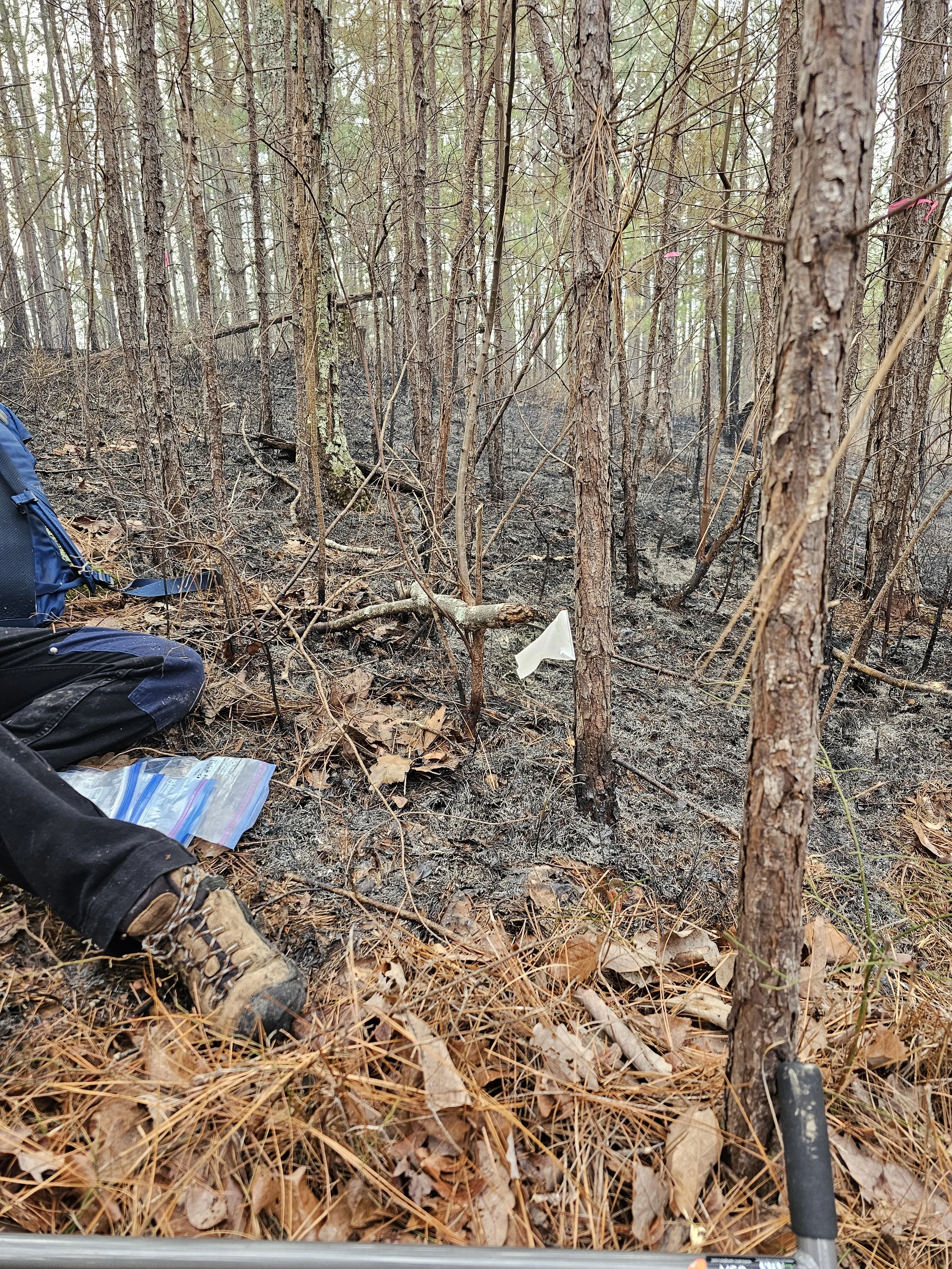
Fire is an important, healthy process in Berry’s Montane Longleaf Pine stands. This fire doesn’t just affect aboveground plants and animals, however. It also impacts the belowground environment, affecting soil fungi, plant roots, nutrient cycling, and carbon storage. Montane Longleaf Pine ecosystems are also historically understudied compared to their Costal Longleaf Pine counterparts. The EM-CE lab, alongside the DURT lab of Dr. Katie Beidler, are studying how fungi interact with plants and soil in this overlooked environment.
Responses to Fire
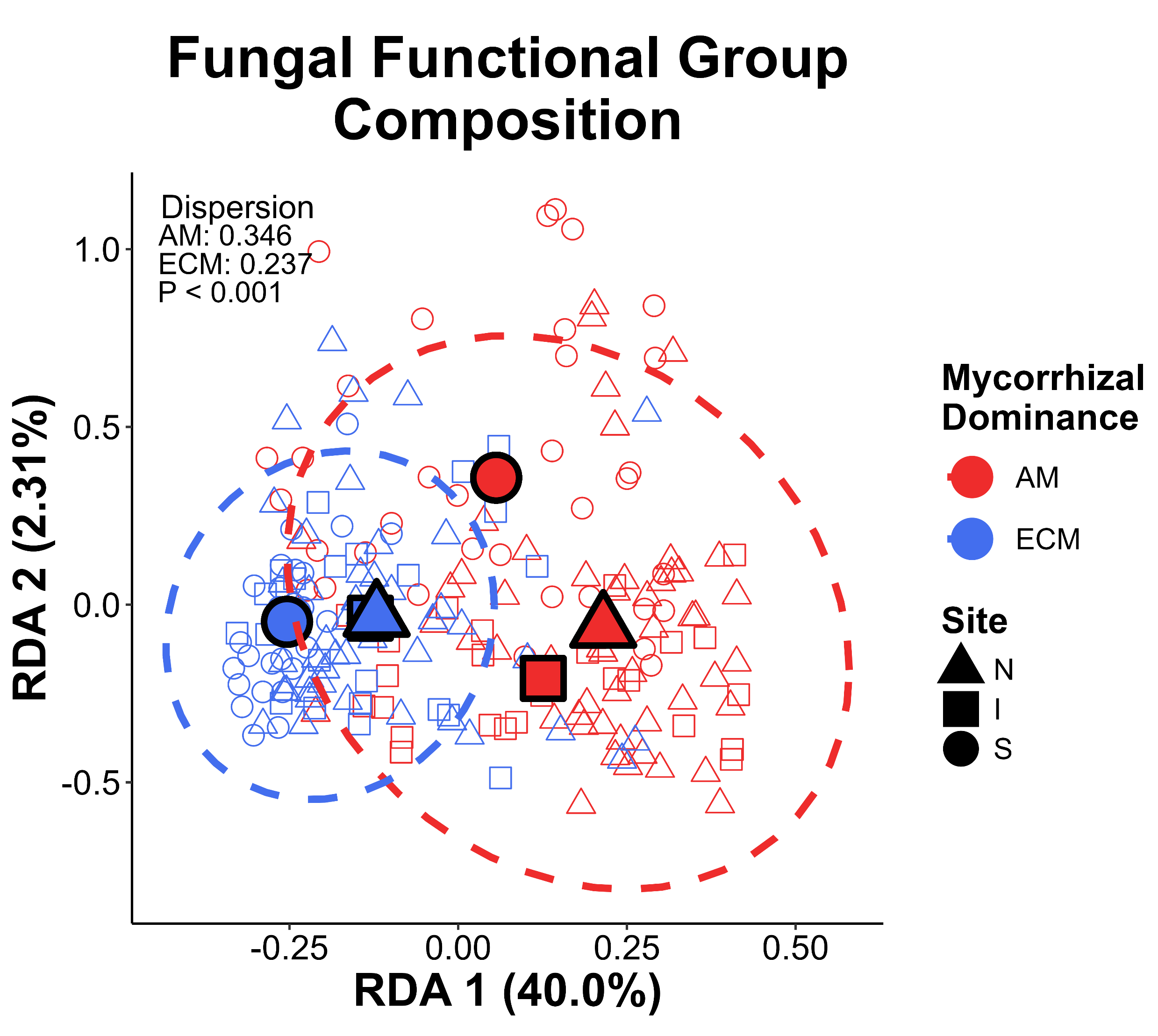
Soil microorganisms are limited in their ability to spread and colonize new areas. As a result, small changes in space or time can lead to big changes to fungal communities. This is especially true if different types of plants occur along with these spatiotemporal changes and as the world is affected by global climate change. Sampling soil or plant roots at various times of the year and at different distances between samples allows us to explore these interesting dynamics and understand how they affect environmental health.